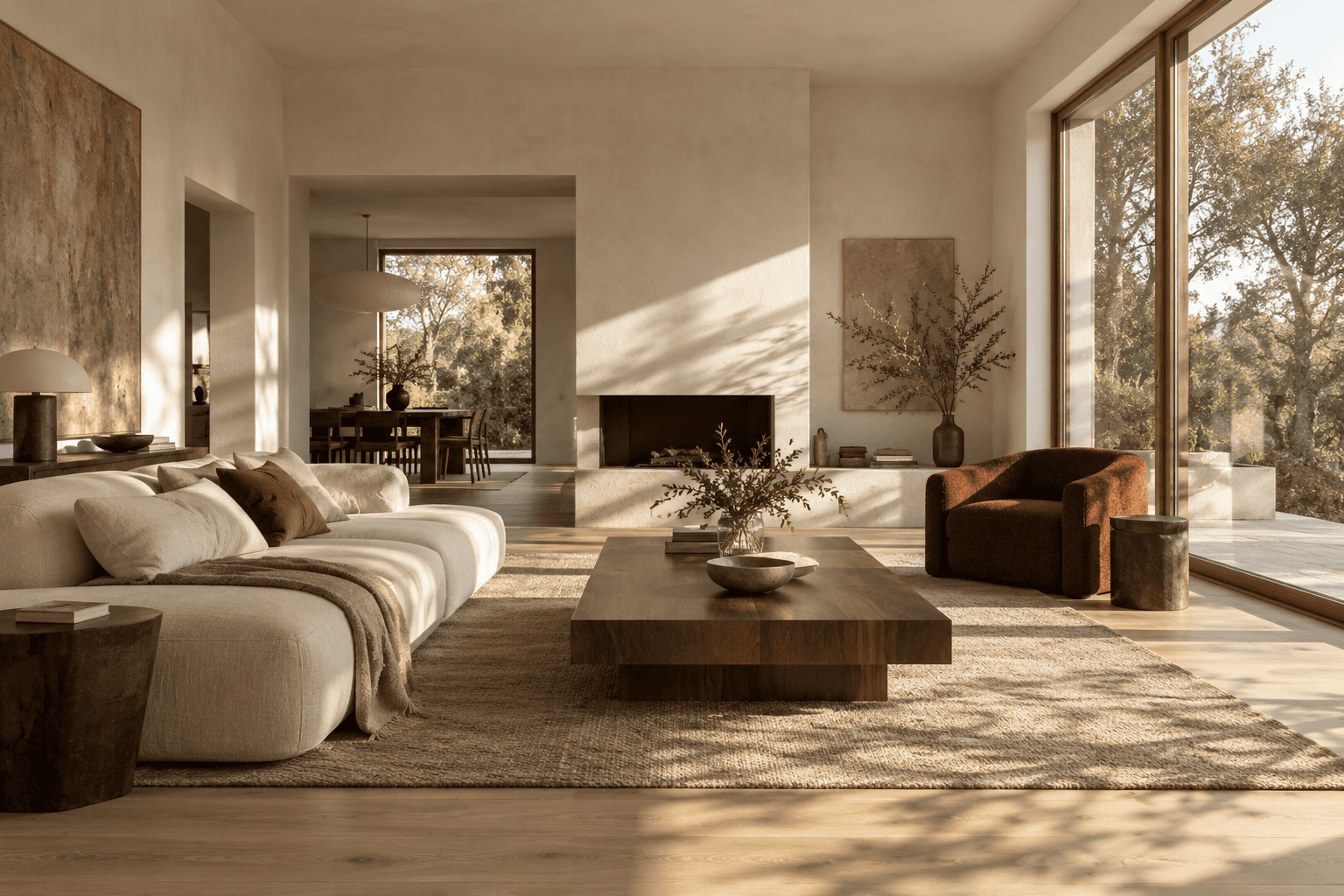
A room looks different in the morning and evening. Light travels across the floor, draws attention to surfaces and leaves others in shadow. In our fictional room study, planning begins with a simple observation: where do you like to spend time at different hours of the day?
Observe before you furnish
Move a chair to different parts of the room and sit for a moment. Where is reading comfortable? Where does sunlight cause glare? Which corner feels inviting on an overcast day? These observations can guide the placement of a sofa, desk and dining table.
Several light sources, different purposes
One ceiling light can illuminate a room evenly. Different activities benefit from additional sources: a reading lamp beside a chair, a light above a work surface and a small lamp on a sideboard. This lets the atmosphere change without rearranging the entire room.
Look at materials throughout the day
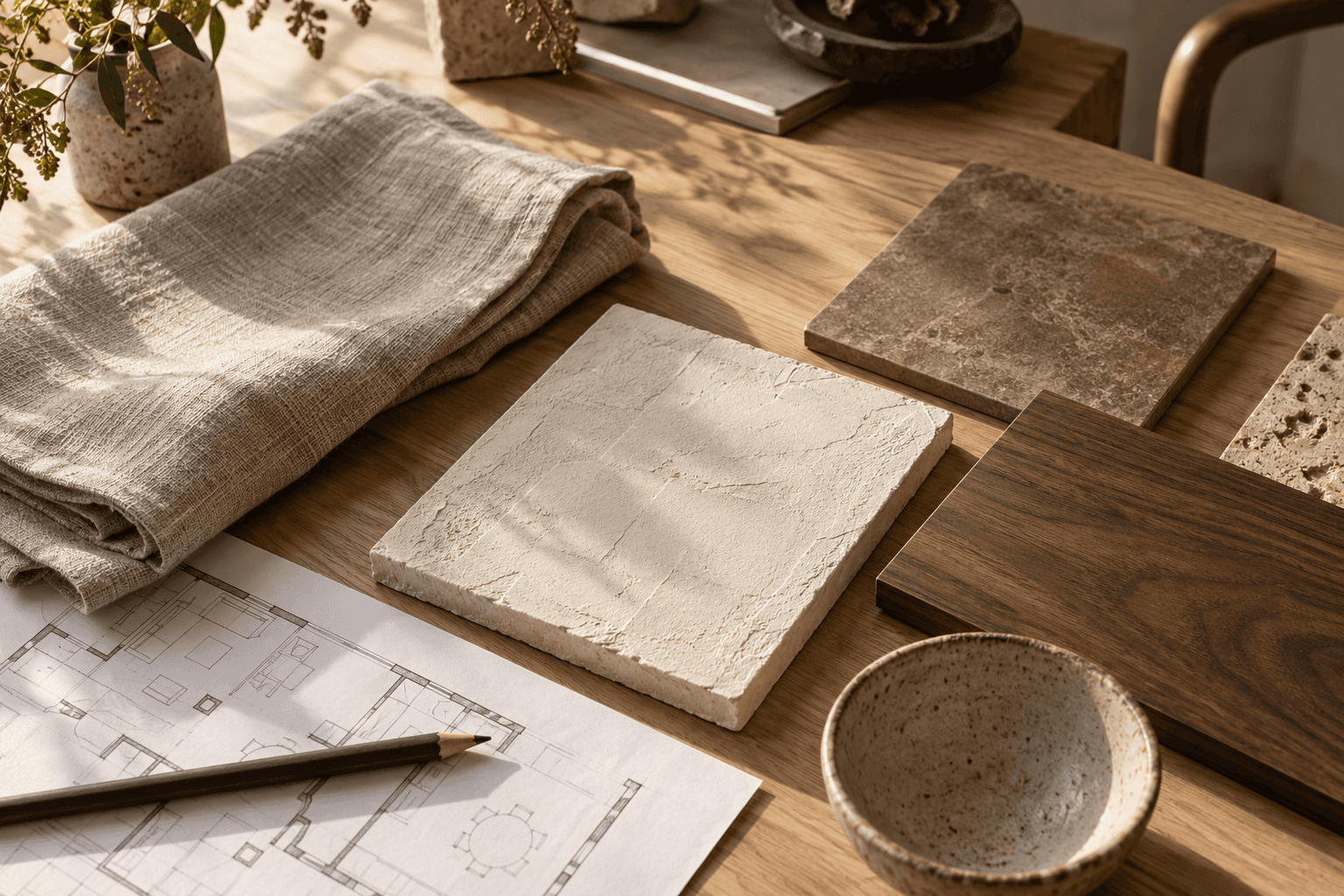
A warm white on a small sample can look different across a whole wall. We would place colour samples in several locations and leave them there until evening. Planning often starts with small, practical experiments like these.